
Truck accidents in work zones can be especially dangerous because construction areas change the normal flow of traffic. Lanes may narrow, shoulders may disappear, speed limits may drop, and drivers may need to merge with little warning. When a large commercial truck enters that environment, the risk can increase quickly.
A work zone crash may involve a semi-truck, delivery truck, passenger vehicle, road crew, construction equipment, or multiple vehicles caught in a sudden slowdown. These crashes can happen because of speeding, distraction, poor lane changes, unsafe following distance, confusing signage, driver fatigue, or limited space for large trucks to maneuver.
For readers researching truck accidents in work zones, the most important point is this: these crashes are rarely simple. The investigation may need to review the truck driver’s actions, the trucking company’s safety practices, construction zone design, warning signs, traffic control plans, speed data, dash cam footage, and witness accounts.
This article is for educational blog content only. It is not legal advice and does not create an attorney-client relationship.
For related reading, visit our guides on truck accident digital evidence, automatic emergency braking in heavy trucks, and truck driver fatigue.
Why Work Zones Are Risky for Commercial Trucks
Commercial trucks need more room to stop, turn, and merge than passenger vehicles. In a normal highway setting, that already creates safety challenges. In a work zone, the problem becomes harder because traffic patterns may change suddenly. A truck driver may face narrowed lanes, temporary barriers, closed shoulders, workers near traffic, uneven pavement, reduced visibility, and vehicles merging aggressively at the last moment.
The Federal Highway Administration has published work zone safety information showing that commercial motor vehicles are a major concern in fatal work zone crashes. Readers can review FHWA’s work zone commercial motor vehicle safety information here: FHWA Commercial Motor Vehicle Safety in Work Zones.
Work zones also create chain-reaction risk. A passenger car may brake suddenly because of a lane closure. A truck behind it may not have enough time to stop if the driver is distracted, speeding, following too closely, or hauling a heavy load. Once a truck strikes one vehicle, several other vehicles may become involved.
Lane Merges and Sudden Traffic Slowdowns
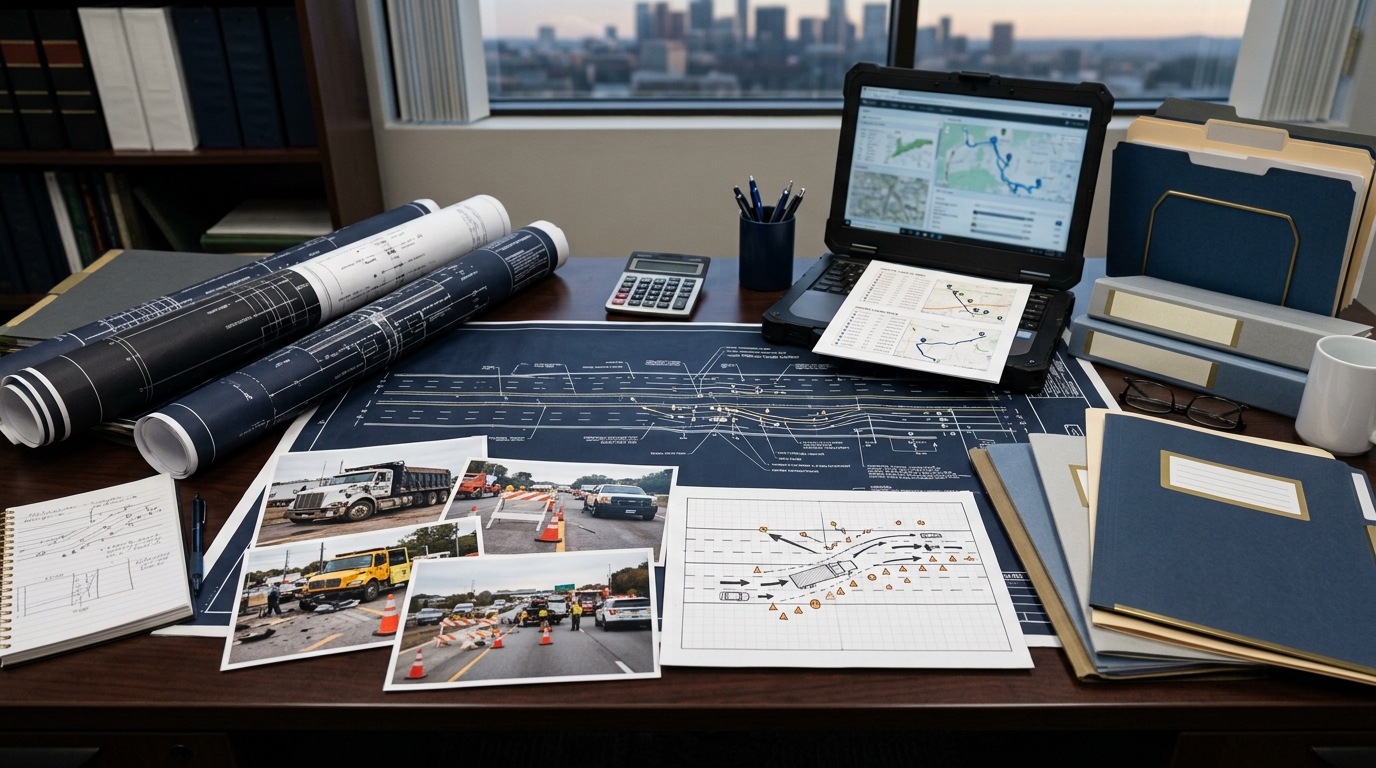
Lane merges are one of the biggest dangers in construction zones. A merge requires drivers to make decisions quickly. Some drivers merge early. Others wait until the last moment. Large trucks may need more space than surrounding drivers expect. If traffic is heavy, a truck may struggle to move safely into the open lane.
Sudden slowdowns are another major issue. Work zones often create stop-and-go traffic with little warning. Passenger vehicles may brake hard when they see cones, signs, flaggers, equipment, or a lane closure. A fully loaded truck may not stop in the same distance as a smaller vehicle. If the driver is traveling too fast for conditions, the result may be a rear-end crash or multi-vehicle pileup.
Why Following Distance Matters More in Work Zones
Safe following distance is critical in any truck accident investigation, but it becomes even more important in a work zone. A commercial driver should expect unpredictable traffic near lane closures, construction barriers, and reduced-speed areas. If a truck follows too closely, even a normal traffic slowdown can become dangerous.
Investigators may review speed data, dash cam footage, witness statements, skid marks, braking distance, and event data to determine whether the truck driver had enough time to react. If the truck had forward collision warning or automatic emergency braking, those records may also help explain the timeline before impact.
Common Causes of Truck Accidents in Work Zones
Work zone truck crashes can happen for many reasons. Some involve driver error. Others involve poor traffic control, weak signage, maintenance issues, or unsafe company practices. In many serious crashes, several factors combine.
Common causes may include:
- Speeding through a reduced-speed work zone
- Following too closely in stop-and-go traffic
- Unsafe lane changes near merge points
- Distracted driving or phone use
- Driver fatigue during long highway routes
- Failure to adjust for narrowed lanes or barriers
- Brake problems, tire issues, or poor maintenance
- Confusing construction signs or missing warnings
- Improperly placed cones, barrels, or barriers
- Construction vehicles entering or leaving traffic
A crash may appear to be caused by one driver, but the full investigation may reveal more. For example, a truck may rear-end a vehicle because the driver braked late. But the investigation may also show the driver was fatigued, the company pushed an unrealistic delivery schedule, the brakes were poorly maintained, or warning signs were placed too close to the merge area.
Construction Zone Design Can Affect Crash Risk
Not every work zone is equally safe. A well-designed work zone gives drivers enough time to understand what is changing and react safely. A poorly designed work zone may create confusion, short merge distances, poor visibility, sudden lane shifts, or unsafe conflicts between construction vehicles and public traffic.
When a serious crash happens, investigators may review the traffic control plan, signage, lighting, temporary barriers, pavement markings, speed reduction zones, flagging procedures, and whether the work zone followed applicable safety standards. This does not automatically mean a construction contractor or public agency is responsible, but those facts may matter in the broader crash analysis.
Evidence That May Matter After a Work Zone Truck Crash
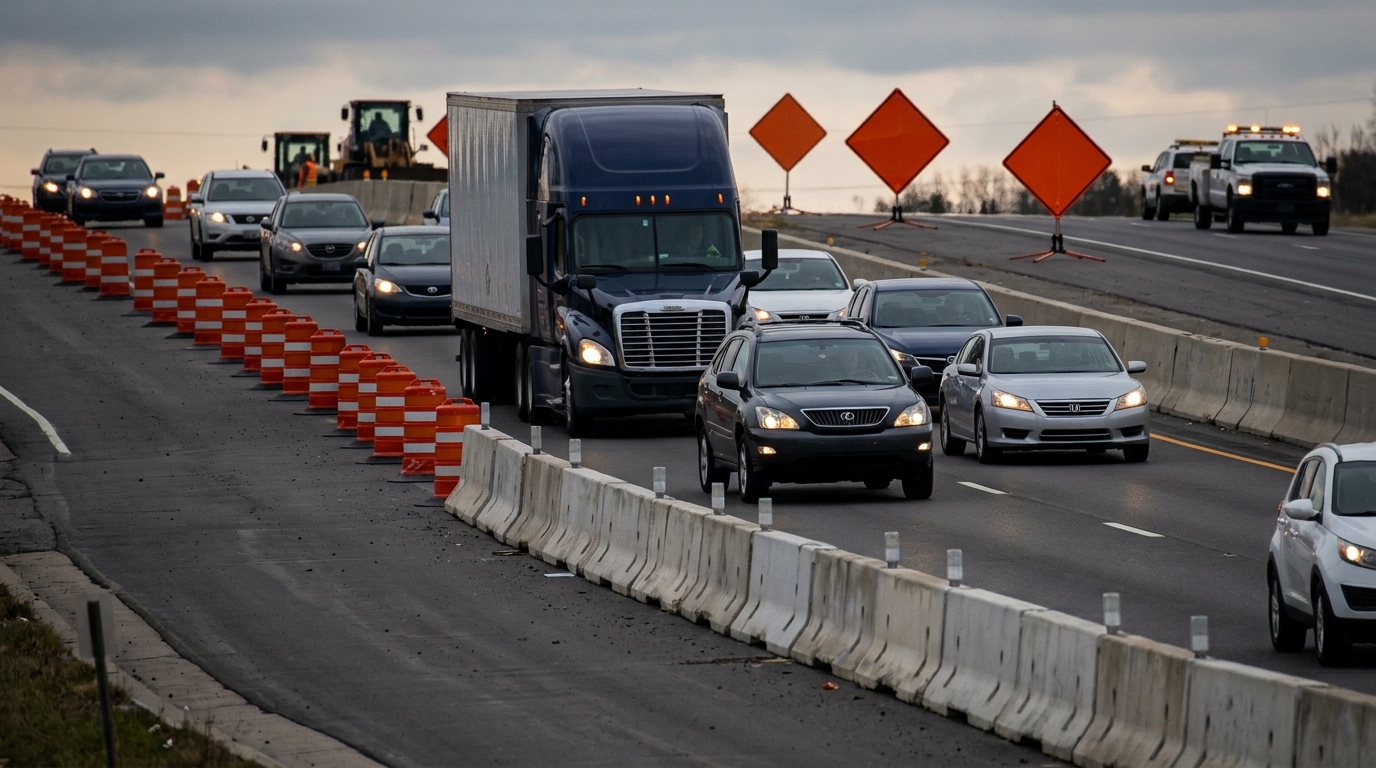
Evidence after a work zone truck crash should be preserved quickly. Construction zones change. Barrels get moved. Signs are adjusted. Lane closures end. Road surfaces are repaired. If the scene is not documented early, important details may disappear.
Digital evidence can also vanish. Dash cam footage may be overwritten. GPS data may expire. Truck event data may require specialized download tools. Construction companies, trucking companies, and government agencies may each have records that show what happened before the crash.
Important Records to Review
A detailed work zone truck accident investigation may include records from several sources. These may include the trucking company, driver, construction contractor, state transportation agency, local police, vehicle owner, maintenance provider, and nearby businesses with cameras.
Important evidence may include:
- Police crash report
- Dash cam footage
- Truck black box or event data
- Electronic logging device records
- GPS and telematics data
- Driver qualification and training records
- Truck maintenance and inspection records
- Brake and tire repair history
- Work zone traffic control plans
- Construction signage and lane closure records
- Photos of cones, barrels, barriers, and pavement markings
- Witness statements and nearby surveillance footage
This evidence can help explain whether the truck was speeding, whether the driver had time to stop, whether the lane merge was clear, whether the work zone was properly marked, and whether the trucking company or another party ignored safety risks.
Why Work Zone Truck Claims Can Involve Multiple Parties
A work zone truck accident may involve more than the truck driver and the injured person. Depending on the facts, responsibility may be examined for the trucking company, construction contractor, traffic control company, maintenance provider, cargo loader, vehicle owner, or another motorist.
For example, a trucking company may become relevant if it failed to train drivers on work zone safety, ignored speeding alerts, or allowed a poorly maintained truck on the road. A construction contractor may become relevant if warning signs were missing, lanes were poorly marked, or equipment entered traffic unsafely. A maintenance provider may become relevant if brake or tire problems contributed to the crash.
Because work zone layouts can change quickly, photos and video from the day of the crash may be especially valuable. Later photos may not show the same lane closure, signage, or traffic pattern that existed when the crash happened.
What Blog Readers Should Remember
Truck accidents in work zones are dangerous because they combine heavy vehicles with narrow lanes, sudden merges, construction equipment, reduced speeds, and unpredictable traffic. These conditions leave little room for mistakes. A single bad decision can lead to a serious rear-end crash, sideswipe, rollover, or multi-vehicle collision.
The key lesson is that work zone truck crashes require a careful look at both driver behavior and the surrounding environment. Speed, following distance, lane changes, driver fatigue, brake condition, signage, lighting, and construction zone design may all matter.
For anyone researching this topic, the safest takeaway is simple: slow down in work zones, avoid distractions, leave extra space around trucks, and expect sudden changes in traffic flow. From an evidence perspective, preserve photos, witness information, medical records, insurance letters, and any video footage as early as possible.
To keep learning, read our articles on delivery truck accidents, underride truck accidents, and truck accident resources.
Disclaimer: This article is for general educational purposes only. It is not legal advice, does not create an attorney-client relationship, and should not be used as guidance for a specific legal issue. Laws, deadlines, and claim procedures vary by location.