
Truck brakes play a major role in highway safety. A fully loaded commercial truck needs a working brake system to slow down and stop safely. When brakes fail or do not work as they should, the results can be serious.
This issue will receive extra attention during the 2026 Brake Safety Week. The Commercial Vehicle Safety Alliance has scheduled the event for August 23 through August 29, 2026. Inspectors will focus on commercial vehicle brake systems throughout the week.
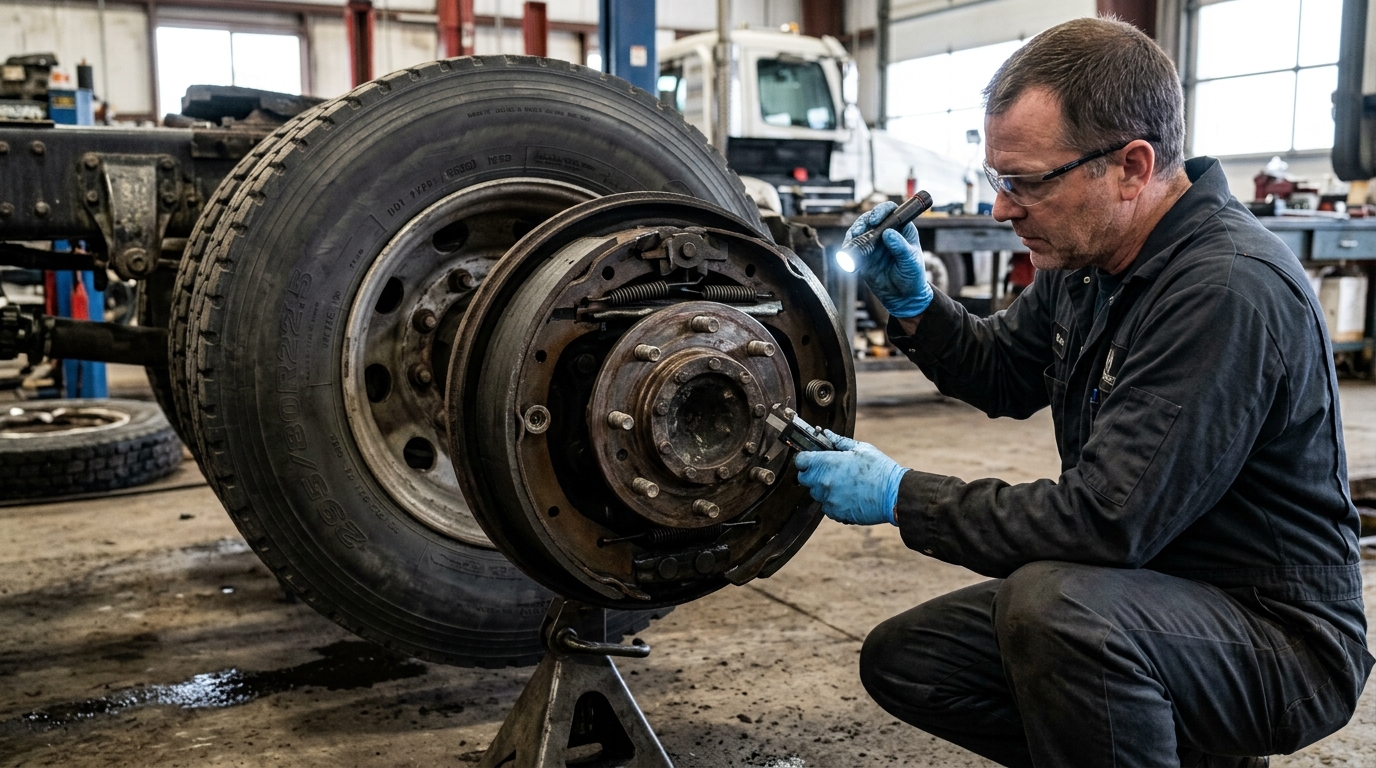
This year’s special focus is brake drums and rotors. Damage to these parts can reduce braking performance. In some cases, broken pieces can also separate from a truck and create another road hazard.
Brake Safety Week is mainly an inspection and education program. Still, it highlights an important issue for truck accident victims. When a truck cannot stop in time, investigators may need to examine its brakes, maintenance history, inspection reports, and repair records.
A brake problem does not automatically prove that a trucking company caused a crash. Investigators must look at all available facts. However, poor maintenance or ignored brake problems may become important evidence.
Why 2026 Brake Safety Week Matters for Truck Safety
CVSA organizes Brake Safety Week as part of its Operation Airbrake program. Inspectors in the United States, Canada, and Mexico take part in the effort.
During the event, inspectors check commercial vehicles for brake problems and other safety violations. They may remove a truck from service when they find a serious out-of-service violation. The truck cannot return to normal operation until the problem is corrected.
The program also encourages truck drivers and carriers to inspect their vehicles before and after trips. Regular maintenance can help companies find worn or damaged parts before they create a larger problem.
Federal rules also require commercial motor vehicles to have brakes that can safely stop and hold the vehicle. These requirements cover service brakes and other parts of the braking system.
For truck accident victims, these rules can provide useful background. The main question after a crash is not simply whether a truck passed an inspection in the past. Investigators often need to know the actual condition of the brakes when the collision happened.
What Inspectors Are Focusing on in 2026
Brake Safety Week covers the full braking system. However, CVSA selected brake drums and rotors as the special focus for 2026.
These parts deal with heat and friction every time a truck slows down. Over time, wear or damage may affect how well the system performs.
Inspectors may look for visible damage and other conditions that could affect safe braking. They can also check additional brake components during a commercial vehicle inspection.
Brake condition matters because large trucks carry far more weight than passenger cars. If a brake system cannot produce enough stopping force, the truck may travel farther before it stops. That can become critical when traffic suddenly slows or stops.
Why Brake Drums and Rotors Are the 2026 Focus
CVSA says damaged brake drums and rotors may affect brake efficiency. Broken pieces may also come loose while the truck is moving.
A damaged component deserves attention during a crash investigation. Investigators may examine cracks, wear patterns, heat damage, missing pieces, and other signs of a problem.
Still, the presence of damage does not answer every question. Investigators need to determine when the damage occurred. They may also need to find out whether the driver or carrier knew about the problem before the crash.
Maintenance records can help answer those questions. Repair invoices, inspection reports, driver complaints, and service records may show whether a brake issue existed before the collision.
The Commercial Vehicle Safety Alliance’s 2026 Brake Safety Week announcement provides more information about this year’s inspection program and brake drum and rotor focus.
When Brake Problems Can Put a Truck Out of Service
Not every brake defect leads to the same result. Some problems may require repair, while more serious violations can lead to an out-of-service order.
During Brake Safety Week, inspectors will report brake-related violations to CVSA. Trucks with qualifying out-of-service violations may have to remain off the road until the carrier corrects the problem.
This type of inspection record may become important after a later accident. Previous violations can provide context about the truck’s maintenance history.
However, an old violation does not prove that the same defect caused a later crash. Investigators should compare inspection dates, repair records, vehicle mileage, and the condition of the truck after the collision.
A complete review may reveal whether the carrier fixed the earlier problem. It may also show whether similar brake issues appeared again.
How Brake Problems Can Affect a Truck Accident Claim
Brake problems can become especially important in rear-end crashes. They may also matter in downhill crashes, intersection collisions, work zone accidents, and crashes involving stopped traffic.
Imagine a tractor-trailer approaching traffic that has stopped on a highway. The driver presses the brake pedal, but the truck does not slow down enough. The truck then crashes into the vehicles ahead.
Several factors could explain what happened.
The driver may have been traveling too fast. Following distance may have been too short. Driver distraction or fatigue may also have reduced the time available to react.
On the other hand, worn or damaged brakes could have affected the truck’s ability to stop. More than one factor can also contribute to the same crash.
That is why investigators should avoid assumptions. They need physical evidence, electronic data, maintenance records, witness accounts, and other information before reaching conclusions.
Our article about automatic emergency braking in heavy trucks explains how modern braking technology may also become relevant after a rear-end collision.
Who May Be Responsible for Poor Truck Maintenance?
A serious truck accident can involve several companies or individuals. Responsibility depends on who controlled the truck and who had a duty to inspect, maintain, or repair it.
The trucking company may become part of the investigation. Investigators may ask whether the carrier followed a regular maintenance schedule. They may also review how the company handled reported brake problems.
The driver may have relevant duties as well. Drivers perform vehicle inspections and may report defects they find during operation.
A separate maintenance company could also become involved. Some carriers hire outside shops to inspect and repair their trucks. Investigators may review the work that those companies performed before the crash.
Parts manufacturers may become relevant in some cases. A defective brake component can raise different questions from a worn component that the carrier failed to replace.
The facts of each collision determine which parties require further investigation.
Our truck maintenance issues resource section covers maintenance records, equipment failures, brake problems, and other safety issues that may arise after commercial vehicle crashes.
Evidence to Review After a Possible Truck Brake Failure
A brake failure investigation often requires more than looking at the damaged truck. Investigators may need to reconstruct what happened before the collision.
The condition of the brake system is one part of that process. Records showing how the carrier maintained the truck can provide another part.
Electronic evidence may also help. Many commercial trucks store information about speed, braking, and vehicle movement. Dash cameras and fleet systems may provide additional details.
Truck accident evidence can disappear over time. Companies may overwrite digital data as part of normal business practices. Damaged vehicles may also undergo repairs after a crash.
For those reasons, early evidence preservation can be important.
Records That May Explain Why the Truck Failed to Stop
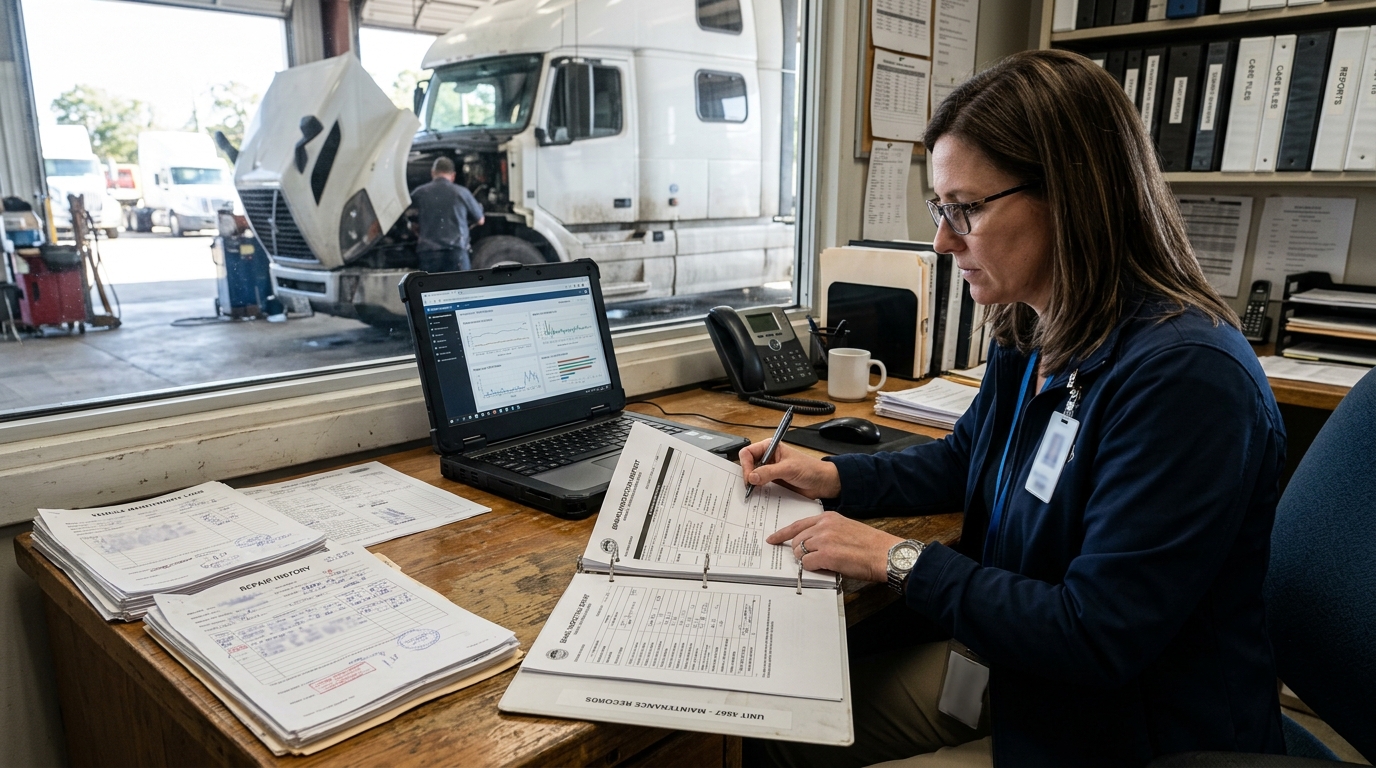
Investigators may review many sources when brake failure is suspected. Useful evidence can include:
- Brake inspection reports
- Truck maintenance records
- Repair invoices and work orders
- Driver vehicle inspection reports
- Roadside inspection records
- Photos of brake drums, rotors, and other parts
- Electronic control module data
- Fleet telematics records
- Dash camera footage
- Automatic emergency braking data
- Driver statements
- Witness statements
- Police crash reports
- Delivery and dispatch records
- Records of earlier brake complaints
These records can help investigators build a timeline.
For example, a driver may have reported a brake problem several days before the crash. Maintenance records can show what happened next. They may show that the carrier repaired the problem promptly. In another case, they may show no repair at all.
Inspection records can provide additional context. A recent roadside violation involving the same brake system may deserve closer review.
Electronic truck data can also help explain the final seconds before impact. Investigators may look at vehicle speed and braking activity. They can compare that information with physical evidence from the crash scene.
Our guide to ELDs, dash cams, and black box data after a truck accident explains several forms of electronic evidence that may help reconstruct a commercial truck collision.
Why Early Evidence Preservation Matters
Brake parts may provide valuable physical evidence after a crash. Investigators may want to inspect the truck before repairs change its condition.
Photos can document visible damage. A qualified inspection may also identify worn, cracked, loose, or damaged components.
Maintenance files deserve early attention too. These records may show previous inspections, repairs, replacement parts, and driver complaints.
Digital evidence can be just as important. Dash camera video, fleet data, and other electronic records may not remain available forever.
Crash victims should also preserve their own evidence. Keep photos, medical records, towing documents, repair estimates, insurance messages, and witness information. Avoid deleting original files that relate to the collision.
The 2026 Brake Safety Week puts renewed attention on the condition of commercial truck brakes. Its special focus on drums and rotors also highlights the importance of regular inspection and maintenance.
After a serious truck crash, brake problems should not be assumed or ignored. Investigators need to examine the vehicle, maintenance history, electronic records, and crash scene evidence.
Those details may help explain whether a driver made an error, a mechanical problem affected the truck, or several factors worked together to cause the collision.
For more information about commercial vehicle crashes, evidence, and trucking safety, visit our truck accident resources.
Disclaimer: This article provides general educational information only. It is not legal advice and does not create an attorney-client relationship. Laws, deadlines, and legal procedures can vary depending on the facts and location of a case.