
Underride truck accidents are among the most severe types of crashes involving large commercial vehicles. These collisions happen when a smaller vehicle slides beneath the rear or side of a large truck or trailer. Because the trailer sits higher than the hood of many passenger vehicles, the upper part of the car may take the main force of impact.
For blog readers researching truck crash safety, underride accidents are important because they raise questions about trailer guards, visibility, braking, lighting, driver reaction, road conditions, and truck company safety practices. These crashes may involve rear underride, side underride, or complicated impact angles that require careful investigation.
This article explains why underride truck accidents are so dangerous, what types of evidence may matter, and why these cases often require more than a basic police report. This content is for general educational purposes only and should not be treated as legal advice.
For more background, read our guides on truck accident digital evidence, automatic emergency braking in heavy trucks, and truck driver fatigue.
What Is an Underride Truck Accident?
An underride crash occurs when a smaller vehicle goes partly or fully underneath a larger truck, trailer, or semi-trailer. This can happen at the rear of a trailer, along the side of a trailer, or in some angled collisions. These crashes are different from ordinary rear-end or side-impact collisions because the height difference between the vehicles can change how crash forces enter the passenger compartment.
Rear underride crashes often happen when traffic slows or stops and a passenger vehicle strikes the back of a trailer. Side underride crashes may happen when a truck crosses traffic, turns, blocks lanes, backs across a roadway, or becomes difficult to see at night. Poor lighting, bad weather, lack of reflectors, sudden stopping, disabled trucks, and limited sight distance may all become important factors.
NHTSA has addressed rear underride protection through Federal Motor Vehicle Safety Standards for rear impact guards and rear impact protection. The agency announced a final rule requiring stronger rear impact guards on trailers and semi-trailers to improve protection in multiple crash scenarios. Readers can review NHTSA’s official announcement here: NHTSA underride protection rule.
Rear Underride Crashes
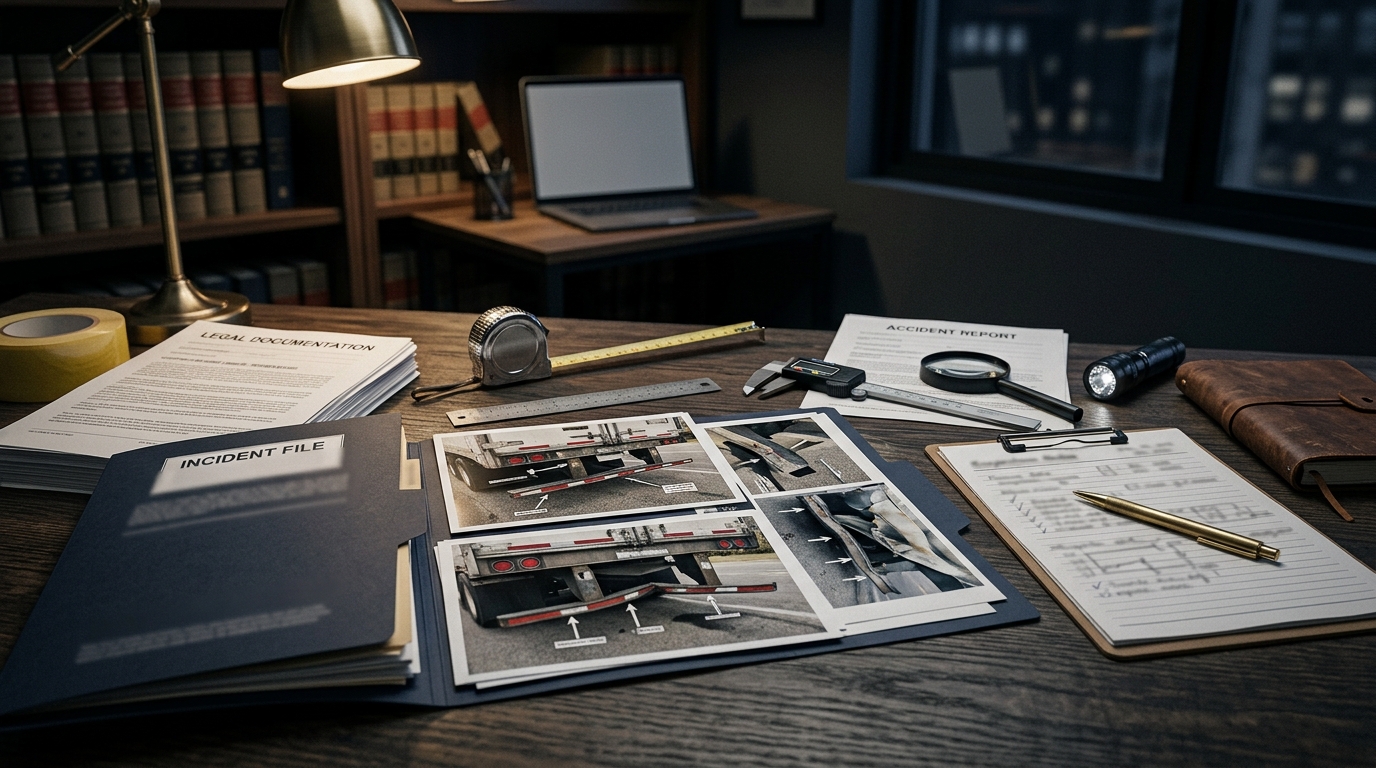
Rear underride crashes usually involve a passenger vehicle striking the back of a trailer. These crashes can occur when a truck stops suddenly, parks on the shoulder, slows in traffic, or becomes difficult to see. The key safety concern is whether the trailer’s rear guard helps prevent the smaller vehicle from sliding underneath.
Rear guards are designed to reduce underride risk, but not every crash is the same. Investigators may need to examine the trailer, guard condition, impact angle, speed, braking, lighting, road surface, and visibility. A guard that performs well in one crash scenario may not perform the same way in another, especially if the impact is offset or angled.
Why Rear Guards Matter
Rear guards can help manage the height mismatch between cars and trailers. If a guard is properly designed, installed, and maintained, it may help keep the passenger vehicle from going too far beneath the trailer. If the guard is damaged, corroded, poorly maintained, missing, or unable to withstand the crash forces, the results may be far worse.
The Insurance Institute for Highway Safety has studied rear underride guard performance and created its TOUGHGUARD award for trailers that prevent underride in three crash test scenarios. You can review IIHS information here: IIHS truck underride guard ratings.
Side Underride Crashes
Side underride crashes occur when a passenger vehicle slides beneath the side of a truck or trailer. These crashes can happen at intersections, during turns, when a truck blocks traffic lanes, or when a trailer crosses the path of another vehicle. They can also happen at night when a trailer is poorly visible.
Side underride crashes are especially concerning because many trailers do not have the same kind of side protection that people may expect from passenger vehicles. The open space beneath the trailer can create a serious hazard when a car approaches from the side at speed.
Visibility and Trailer Position Can Be Critical
In side underride cases, visibility often matters. Was the trailer properly lit? Were reflectors visible? Was the truck stopped or moving? Did the trailer block lanes without warning? Was the driver backing across traffic? Were cones, hazard lights, or warning devices used if the vehicle was disabled?
The position of the trailer also matters. A trailer angled across a road, stopped in a dark lane, or turning across traffic may create a hazard that a passenger vehicle driver cannot avoid in time. Investigators may review lighting, roadway layout, driver sight lines, speed, weather, and witness statements to understand what happened.
Evidence That May Matter After an Underride Truck Crash
Underride crashes usually require careful evidence preservation. The damage pattern on the passenger vehicle, the condition of the trailer guard, the position of the truck, and the available digital records may all help explain the crash. A simple description such as “car hit truck” may miss the deeper safety questions.
Important evidence may include photographs from the scene, trailer inspection records, guard specifications, repair history, lighting records, dash camera footage, black box data, GPS data, driver logs, and witness statements. If the trailer was parked, disabled, or stopped on the roadway, warning devices and hazard-light use may also become important.
Inspection Records and Physical Evidence
The trailer itself may be one of the most important pieces of evidence. Investigators may examine the rear guard, side structure, reflective tape, lighting, mudflaps, bumper area, frame, and undercarriage. They may also review whether the trailer met applicable safety standards and whether it had prior damage or repairs.
Physical evidence can help answer practical questions. Was the guard bent before the crash? Did the guard detach? Was there corrosion? Were bolts missing? Was the trailer properly visible? Did vehicle damage match the reported crash sequence?
Digital Evidence Can Help Reconstruct the Timeline
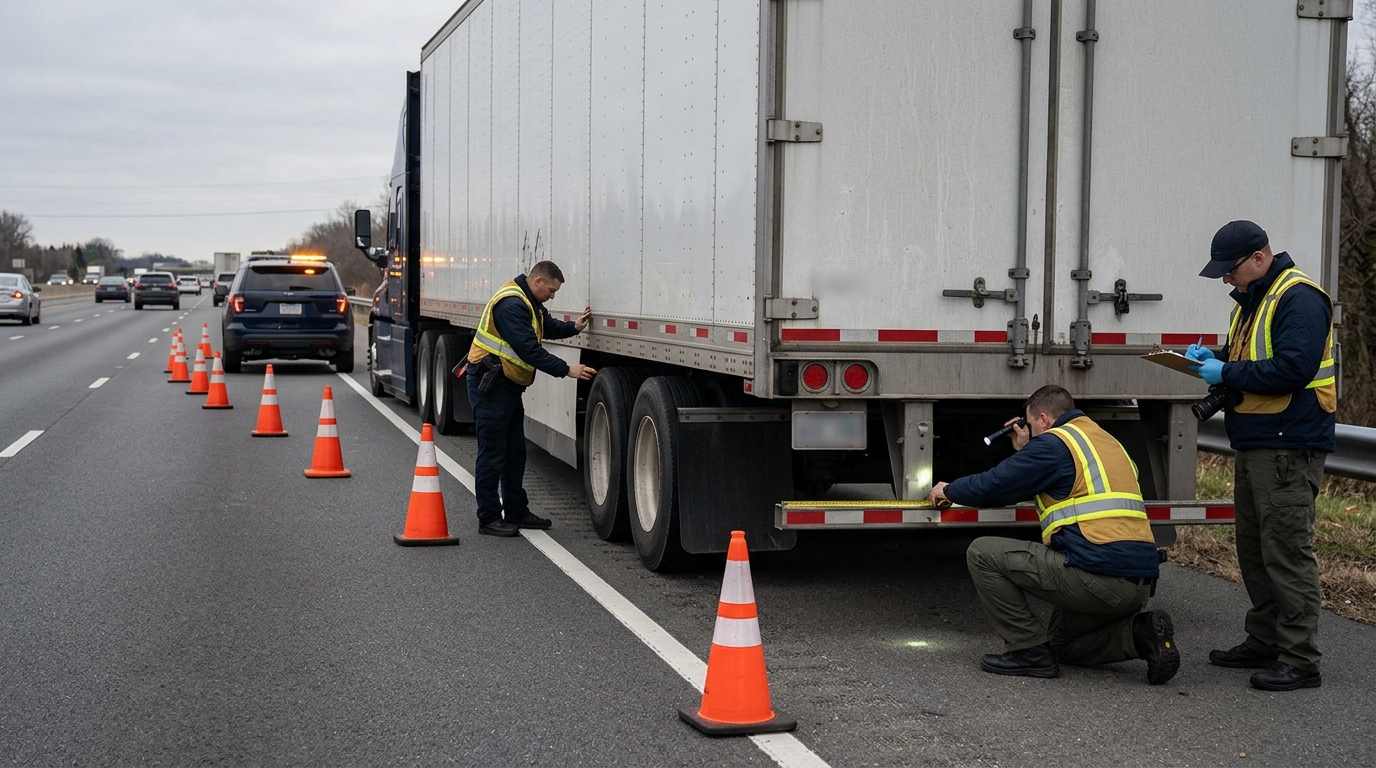
Digital evidence may help show what happened before impact. Dash cam footage may show traffic movement, lighting, lane position, and reaction time. GPS records may show where the truck stopped or how long it remained in a location. Electronic logging device records may show the driver’s schedule and duty status. Engine or braking data may help explain vehicle movement.
This evidence is time-sensitive. Video may be overwritten, GPS data may expire, and maintenance records may become harder to obtain later. For educational readers, the lesson is clear: underride crash investigations depend heavily on preserving both physical and digital evidence early.
Common Questions After an Underride Crash
After an underride truck accident, investigators may ask:
- Was the crash a rear underride, side underride, or angled impact?
- Was the trailer properly equipped with required guards or reflective markings?
- Was the rear guard damaged, corroded, loose, or missing?
- Were lights, reflectors, and hazard signals working?
- Was the truck stopped, turning, backing, or moving slowly?
- Did dash cam or surveillance footage capture the crash?
- Were warning triangles, cones, or flares required or used?
- Did weather, darkness, or roadway design affect visibility?
These questions show why underride crashes can be more complicated than they first appear. The investigation may involve vehicle design, maintenance, driver behavior, visibility, lighting, roadway conditions, and company safety practices.
Why Blog Readers Should Understand Underride Risks
Underride truck accidents are dangerous because they expose passenger vehicle occupants to crash forces in a way that ordinary bumpers and safety systems may not fully manage. Airbags, seat belts, crumple zones, and braking technology still matter, but the height mismatch between vehicles can make these crashes uniquely severe.
Public awareness also matters. Drivers should understand the risks of following large trucks too closely, driving beside trailers for long periods, speeding near commercial vehicles, and failing to adjust for darkness or poor visibility. At the same time, trucking companies and equipment owners must take trailer visibility, guard maintenance, and safe stopping practices seriously.
For a truck accident blog, underride crashes deserve attention because they sit at the intersection of vehicle design, highway safety, and crash evidence. When people understand how these crashes happen, they can better understand why investigation details matter so much.
To continue reading, visit our articles on truck maintenance issues, fatal truck accidents, and truck accident resources.
Disclaimer: This article is for educational blog content only. It is not legal advice, does not create an attorney-client relationship, and should not be used as guidance for a specific claim or legal matter.