
Truck accident investigations have changed. Years ago, many claims depended mostly on police reports, witness statements, skid marks, and photographs from the scene. Those still matter, but modern commercial trucks now create a large amount of digital evidence before, during, and after a crash. Electronic logging devices, dash cameras, GPS systems, onboard computers, inspection records, and phone data may all help explain what happened.
For truck accident victims and families, this matters because a commercial truck crash is rarely a simple “one driver made one mistake” situation. A serious collision may involve the driver, trucking company, maintenance provider, cargo loader, broker, equipment manufacturer, or another party connected to the trip. Digital evidence can help identify whether the crash involved fatigue, speeding, distraction, unsafe maintenance, poor route planning, or pressure from a company schedule.
This article is for general information only. It is not legal advice and does not create an attorney-client relationship. If someone is dealing with a real crash claim, they should speak with a qualified attorney in their state.
For more general information, visit our truck accident resources page or read about truck accident investigations.
Why Digital Evidence Matters in Modern Truck Accident Claims
Commercial trucking is highly documented. Drivers follow hours-of-service rules, carriers maintain driver qualification files, trucks may carry electronic logging devices, and many vehicles use GPS tracking, telematics, dash cameras, collision warning systems, and onboard event data. When a crash happens, those records may show what the driver and truck were doing before impact.
The Federal Motor Carrier Safety Administration explains that an electronic logging device, often called an ELD, automatically records driving time and certain hours-of-service information by connecting to the vehicle engine. You can review the official FMCSA ELD information here: FMCSA ELD Fact Sheet.
That kind of information can be important because truck crash cases often turn on timing. How long had the driver been on duty? Did the truck stop before the crash? Was the vehicle moving too fast for traffic or weather conditions? Did the driver brake late? Was the truck already overdue for maintenance? Digital records may help answer those questions.
However, digital evidence is only useful if it gets preserved. Some records may be overwritten, deleted, lost, or replaced during normal business operations. Dash cam footage may loop. GPS history may be stored for a limited period. Event data may require specialized tools. This is why fast evidence preservation is one of the most important steps after a serious truck accident.
1. Electronic Logging Devices and Hours-of-Service Records

ELD records are often one of the first things investigators look at after a truck crash. These records can show driving time, on-duty time, off-duty periods, engine activity, miles driven, and other information connected to the driver’s workday.
This matters because driver fatigue remains one of the most important issues in commercial trucking safety. A driver who has been on the road too long may react slower, drift lanes, miss traffic changes, or fail to brake in time. Hours-of-service rules are designed to reduce fatigue by limiting how long a commercial driver can drive and work before taking required rest.
ELD records may help answer questions such as:
- How many hours had the driver been driving before the crash?
- How long had the driver been on duty that day?
- Did the driver take required breaks?
- Were there edits or annotations to the log?
- Did the driver operate under a short-haul exception?
- Do fuel, toll, GPS, or delivery records match the ELD log?
An ELD record alone does not always prove fault. But when combined with dispatch records, fuel receipts, bills of lading, GPS records, and driver messages, it may help reveal whether the driver or company ignored safety limits.
2. Dash Cam Footage and In-Cab Video
Dash cam footage can be powerful evidence because it may show traffic conditions, lane position, road hazards, weather, and what happened in the seconds before impact. Some systems face outward toward the road. Others also face inward toward the driver. Depending on the system, video may capture distraction, fatigue signs, phone use, eating, looking away, or delayed reaction.
For example, outward-facing footage might show a truck approaching stopped traffic without slowing down. Inward-facing footage might show whether the driver looked down, reached for an object, or appeared drowsy. Together, those details can help explain why a crash happened.
Dash cam footage can also protect against weak assumptions. Sometimes the first version of events is incomplete. A driver may claim another vehicle cut them off. A witness may only see part of the crash. A video record may confirm, challenge, or clarify those statements.
Dash Cam Evidence Can Disappear Quickly
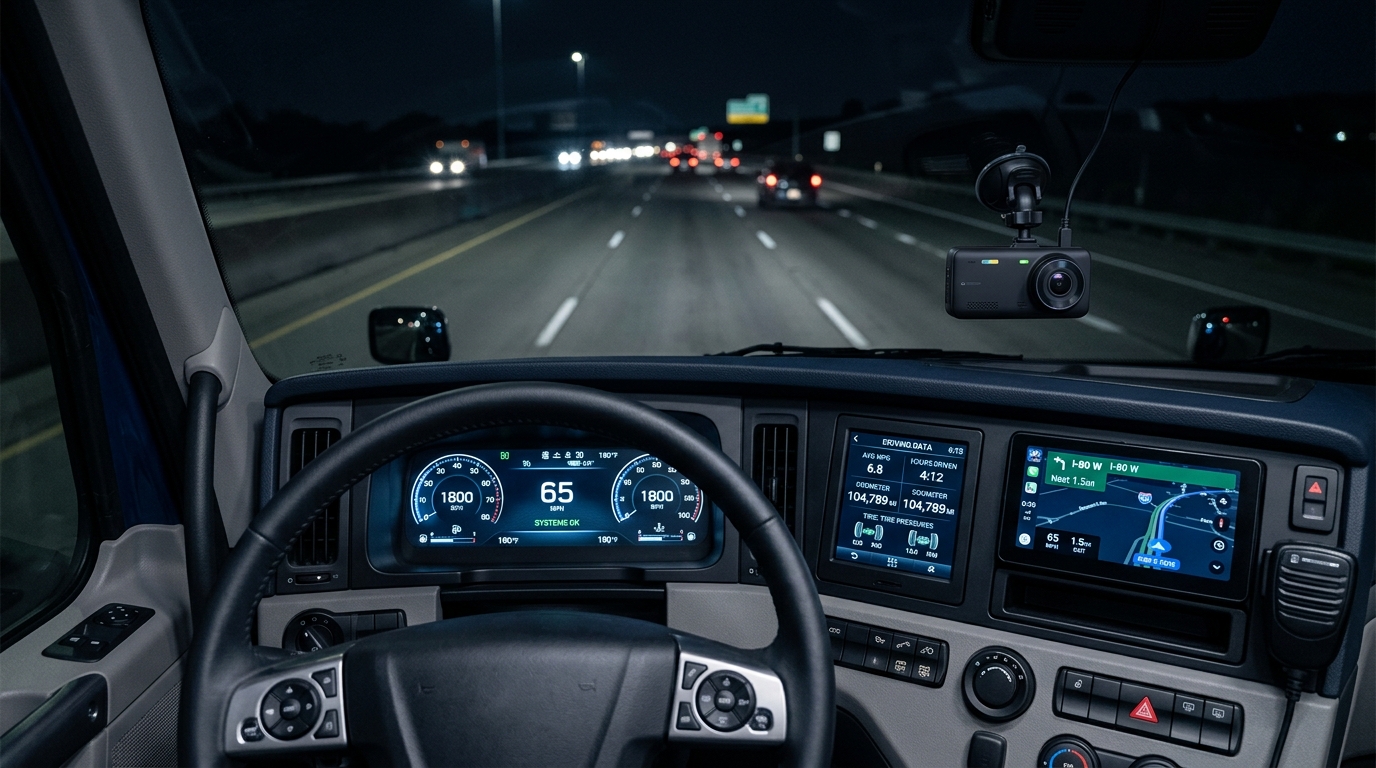
Many camera systems overwrite old footage after a short period unless the footage is locked, downloaded, or preserved. Some systems save only when they detect harsh braking, swerving, or impact. Others upload clips to a carrier’s cloud platform. Because storage rules vary by company and device, early preservation is critical.
After a serious crash, a preservation letter may request the carrier to keep video footage, driver logs, vehicle data, dispatch communications, maintenance records, and related documents. For a blog reader, the key point is simple: the sooner evidence is identified, the better chance it has of being preserved.
3. Black Box Data, GPS Records, and Telematics
People often use the term “black box” to describe onboard vehicle data, but trucks can have several different systems that record useful information. Depending on the vehicle and equipment, investigators may look at engine control modules, event data, GPS tracking, fleet telematics, collision avoidance systems, lane departure systems, and braking data.
These records may help show:
- Vehicle speed before impact
- Brake application and timing
- Throttle position
- Engine activity
- Sudden deceleration
- GPS location history
- Route changes
- Hard braking or harsh acceleration events
Telematics can be especially useful when a crash involves a disputed timeline. If a truck was speeding, stopped illegally, took an unsafe route, or changed lanes moments before impact, GPS and telematics records may help reconstruct the movement of the vehicle.
Digital Records Should Be Compared Against Human Records
Digital data should not be reviewed in isolation. A strong investigation compares electronic records with human-created records. That may include the police report, driver statement, witness accounts, inspection forms, repair invoices, dispatch messages, delivery deadlines, and cargo documents.
If the ELD says one thing but GPS data, toll records, and fuel receipts suggest something else, that inconsistency may raise important questions. If maintenance records show repeated brake complaints before a crash, that may point beyond the driver and toward the carrier or maintenance provider.
What Accident Victims Should Know About Preserving Evidence
A truck accident claim can become harder when key evidence disappears. That does not always mean someone intentionally destroyed it. Businesses often have automatic data retention policies, camera loops, software limits, or normal document schedules. Still, once a serious crash happens, relevant evidence should be protected.
Victims and families can help by keeping their own records. Save photographs, medical paperwork, insurance letters, towing documents, repair estimates, witness names, crash scene details, and any communication from insurance companies. Do not rely only on memory. A written timeline can help later when dates, symptoms, calls, and expenses become harder to track.
It is also smart to avoid posting detailed crash information on social media. Photos, comments, location tags, and casual statements may be taken out of context. Insurance companies and opposing parties may review public posts. Keep personal records private and organized.
Evidence That May Be Requested After a Truck Crash
Depending on the facts of the crash, important records may include:
- ELD data and hours-of-service records
- Dash cam and in-cab footage
- Engine control module or event data
- GPS and fleet telematics records
- Driver qualification file
- Drug and alcohol testing records where applicable
- Maintenance and inspection records
- Brake, tire, and repair history
- Dispatch instructions and delivery schedule
- Load securement and cargo documents
- Company safety policies and training records
Not every case needs every record. A rear-end crash may focus heavily on speed, braking, following distance, fatigue, and distraction. A rollover may focus on speed, cargo loading, steering inputs, road design, and driver training. A tire blowout may require maintenance history, inspection records, tire age, and repair documents.
Why Truck Accident Evidence Can Point to More Than One Responsible Party
One of the biggest differences between a truck accident and an ordinary car crash is the number of possible responsible parties. A commercial driver may be at fault, but the investigation should not stop there. The trucking company may have pushed an unsafe schedule. A maintenance contractor may have missed a dangerous brake issue. A cargo company may have overloaded or improperly secured the trailer. A manufacturer may have supplied a defective component.
Digital evidence can connect these pieces. Driver logs may show fatigue. GPS may show an unrealistic route schedule. Maintenance records may show ignored warnings. Dash cam footage may show late braking. Together, those records help build a clearer picture of why the crash happened.
For readers researching this issue, the main takeaway is this: modern truck accident claims often depend on fast evidence preservation and careful comparison of digital records, physical evidence, and witness accounts. The evidence may show not only what happened, but also whether the crash could have been prevented.
To keep learning, visit our guides on truck driver negligence, truck maintenance issues, and fatal truck accidents.
Disclaimer: This article is for educational purposes only and should not be treated as legal advice. Laws and claim procedures vary by state. For advice about a specific situation, speak with a licensed attorney in the appropriate jurisdiction.