
Delivery truck accidents are becoming a bigger concern on city streets, suburban roads, apartment complexes, and neighborhood driveways. Online shopping, food delivery, same-day shipping, and last-mile logistics have placed more delivery vans, box trucks, cargo vehicles, and independent drivers on the road. That means more vehicles stopping near curbs, backing into tight areas, double-parking, entering driveways, and moving through pedestrian-heavy areas.
When a delivery truck crash happens, the question of responsibility is not always simple. The driver may be at fault, but the investigation may also involve the delivery company, a contractor, a vehicle owner, a maintenance provider, a loading company, or another motorist. Some drivers work directly for a company. Others operate through contractors, subcontractors, app-based platforms, or franchise-style delivery networks.
This guide explains who may be responsible after delivery truck accidents and what evidence may help clarify the facts. It is written for general educational purposes only. It is not legal advice and does not create an attorney-client relationship.
For more background, read our guides on truck accident digital evidence, truck driver fatigue, and truck accident investigations.
Why Last-Mile Delivery Truck Accidents Can Be Complicated
A last-mile delivery crash is different from a normal two-car accident because the vehicle is usually being used for business. The driver may be following a route, scanning packages, checking delivery instructions, using GPS, searching for a parking spot, or trying to meet a tight schedule. The crash may happen during a delivery stop, between stops, while backing up, or while pulling away from a curb.
Delivery truck accidents may involve pedestrians, cyclists, motorcyclists, passenger vehicles, parked cars, and property damage. A delivery van may block a bike lane. A box truck may reverse without enough visibility. A driver may rush through a neighborhood because the route is behind schedule. A cargo vehicle may stop suddenly in traffic to locate an address.
These details matter because they can affect responsibility. A crash investigation should not stop at the first obvious mistake. It should ask why the mistake happened, whether the company created unsafe pressure, whether the vehicle was properly maintained, and whether the driver had the right training for the route and vehicle.
What Makes Delivery Vehicles Risky in Residential and Urban Areas

Delivery vehicles often operate in places that are not designed for frequent commercial stops. Narrow streets, apartment complexes, school zones, business districts, loading zones, alleyways, and crowded curbs can create constant conflict between vehicles and people outside vehicles.
Drivers may need to stop many times per hour. They may step in and out of the vehicle, park briefly, reverse into driveways, cross sidewalks, or load and unload packages near traffic. If the driver feels rushed, distraction and poor judgment become more likely.
Unlike long-haul trucking, last-mile delivery often involves constant short trips. That can create different safety risks: repeated parking, route distractions, frequent stops, poor rear visibility, blind spots near pedestrians, and contact with cyclists or parked vehicles.
Curb Space and Parking Can Create Safety Problems
Curb space is a major issue in delivery vehicle safety. When there is no safe loading zone, a delivery vehicle may stop in a travel lane, block a bike lane, park too close to an intersection, or create a visibility problem for pedestrians and drivers. Even a short stop can create risk when traffic is heavy.
Readers can learn more about pedestrian safety from the National Highway Traffic Safety Administration here: NHTSA Pedestrian Safety.
A delivery crash may involve more than one bad decision. The driver may have parked poorly, but the route design, lack of loading space, delivery expectations, and company safety policies may also matter. In some situations, city infrastructure and curb management problems can add to the danger, although that does not automatically make a public agency responsible.
Evidence That May Explain What Happened
Delivery truck accidents can generate a large amount of evidence. Some of it may come from the vehicle. Some may come from the delivery platform. May come from nearby homes, stores, dash cameras, security cameras, or witnesses.
Important evidence may include delivery route records, GPS data, package scan times, driver app activity, dispatch messages, vehicle inspection records, dash camera footage, maintenance logs, company safety rules, and photos from the crash scene. If a pedestrian or cyclist was involved, visibility, lighting, road design, parking location, and vehicle blind spots may also matter.
One of the most important questions is whether the driver was doing something work-related at the time of the crash. Was the driver delivering a package? Returning to a warehouse? Driving between stops? Using a company app? Operating a personal vehicle for a delivery platform? These facts may affect who gets pulled into the responsibility analysis.
Route Data and Delivery App Records May Matter
Last-mile delivery work often leaves a digital trail. A route system may show where the driver was supposed to go. Package scans may show the timing of stops. GPS history may show vehicle speed and location. App records may show whether the driver received instructions, messages, or route updates before the crash.
That data can help answer practical questions. Was the driver behind schedule? Did the driver make an unsafe turn while trying to reach the next stop? Was the driver distracted by the delivery app? Did the route require repeated stops in unsafe locations? Were company expectations realistic for traffic, weather, and parking conditions?
Who May Be Responsible After a Delivery Truck Accident?
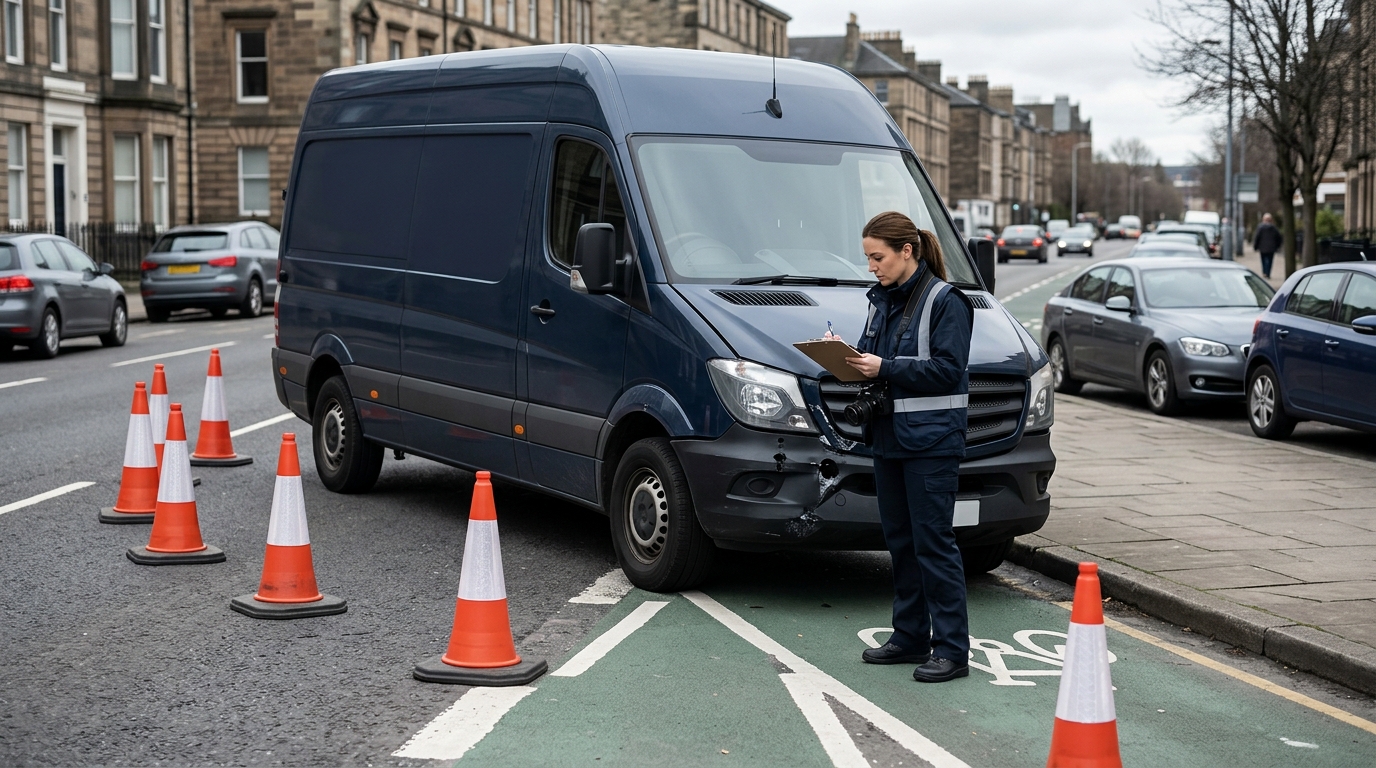
Responsibility after a delivery truck crash depends on the facts. In some cases, one person may be mainly responsible. In other cases, several parties may share fault. A good investigation looks at the driver’s conduct, the company structure, vehicle ownership, maintenance history, route pressure, and whether the driver was acting within the scope of delivery work.
Because delivery systems can involve multiple business layers, identifying the correct parties can be challenging. A vehicle may carry one company’s branding but be operated by another contractor. A driver may wear a company uniform but technically work for a delivery service partner. A van may be leased, rented, personally owned, or fleet-owned.
Possible Responsible Parties in a Delivery Vehicle Crash
The driver is often the first party examined. A driver may be responsible for speeding, distracted driving, unsafe backing, failure to yield, unsafe parking, running a red light, or failing to check blind spots. However, the driver may not be the only party involved.
Possible responsible parties may include:
- The delivery driver
- The delivery company
- A delivery service contractor or subcontractor
- A warehouse or logistics company
- The vehicle owner
- A maintenance or repair provider
- A company responsible for loading cargo
- A vehicle or parts manufacturer
- Another negligent motorist
For example, if the crash happened because the driver was texting while driving, driver negligence may be central. If the vehicle had worn brakes, poor tires, or a broken backup camera, maintenance may become important. If the driver was pushed to complete an unrealistic number of deliveries, company policies and route pressure may need review.
Driver Conduct and Company Policies Both Matter
Delivery companies and contractors may have safety policies covering parking, reversing, package scanning, phone use, speed, route planning, customer instructions, vehicle inspections, and accident reporting. If those policies exist only on paper but are not enforced, that may raise questions.
Company-level evidence may show whether the driver received training, whether safety complaints were ignored, whether the company monitored speeding or hard braking, and whether drivers were encouraged to prioritize speed over safety. A pattern of unsafe route pressure may become important when a crash happens during delivery work.
Vehicle Ownership, Maintenance, and Loading Can Change the Case
Not every delivery crash is caused only by driving behavior. A vehicle problem may contribute. Faulty brakes, worn tires, broken mirrors, poor lighting, defective backup cameras, overloaded cargo, or unsecured packages can all affect safety.
Maintenance records may show whether the vehicle was inspected properly before the route. Repair invoices may show repeated issues that were not fixed. Loading records may show whether cargo blocked visibility or shifted during the trip. If a defect or poor maintenance contributed to the crash, responsibility may extend beyond the driver.
Delivery truck accidents are not always straightforward. A crash may look simple at first, but the full story may involve route pressure, app distraction, unsafe curb use, poor training, weak supervision, vehicle defects, or multiple business entities. That is why evidence matters.
For readers researching this topic, the main takeaway is clear: after a last-mile delivery crash, it is important to understand not only what the driver did, but also what systems, records, and company decisions shaped the delivery trip.
To keep learning, visit our articles on motor vehicle accidents, truck maintenance issues, and truck accident resources.
Disclaimer: This article is for educational blog content only. It is not legal advice, does not create an attorney-client relationship, and should not be used as guidance for a specific legal matter. Laws, insurance rules, and claim procedures vary by location.